


For most electrical contractors, fire alarm is a small slice of a big project. Yet it is often the item that holds up the certificate of occupancy. A plan set comes back with comments, a device lands in the wrong spot, the elevator recall doesn’t work at the acceptance test, and suddenly the whole schedule is waiting on one system. The good news: almost every fire alarm delay is predictable, and most can be avoided before the first box goes in the wall.
Where fire alarm projects get stuck
The Authority Having Jurisdiction (AHJ), usually the local fire marshal or building department, reviews fire alarm submittals against the codes it has adopted, including NFPA 72, the fire code, and any local amendments. The most common sticking points we see are:
- Incomplete submittals. Missing battery calculations, voltage drop calculations, device data sheets, or a clear sequence of operations.
- Device layout that doesn’t match the code or the room. Smoke detector spacing on sloped or beamed ceilings, strobe coverage in odd-shaped rooms, or audibility in mechanical spaces.
- Late design changes. A tenant moves a wall, the ceiling height changes, or the architect adds a room, and the approved drawings no longer match the field.
- Interfaces with other trades. Duct detectors, fan shutdown, elevator recall, door holders, sprinkler monitoring, and smoke control all depend on another contractor’s work being ready and wired correctly.
- Failed acceptance tests. Going into the final test without a full pre-test is the fastest way to schedule a second visit and lose a week.
A simple path from plans to final acceptance
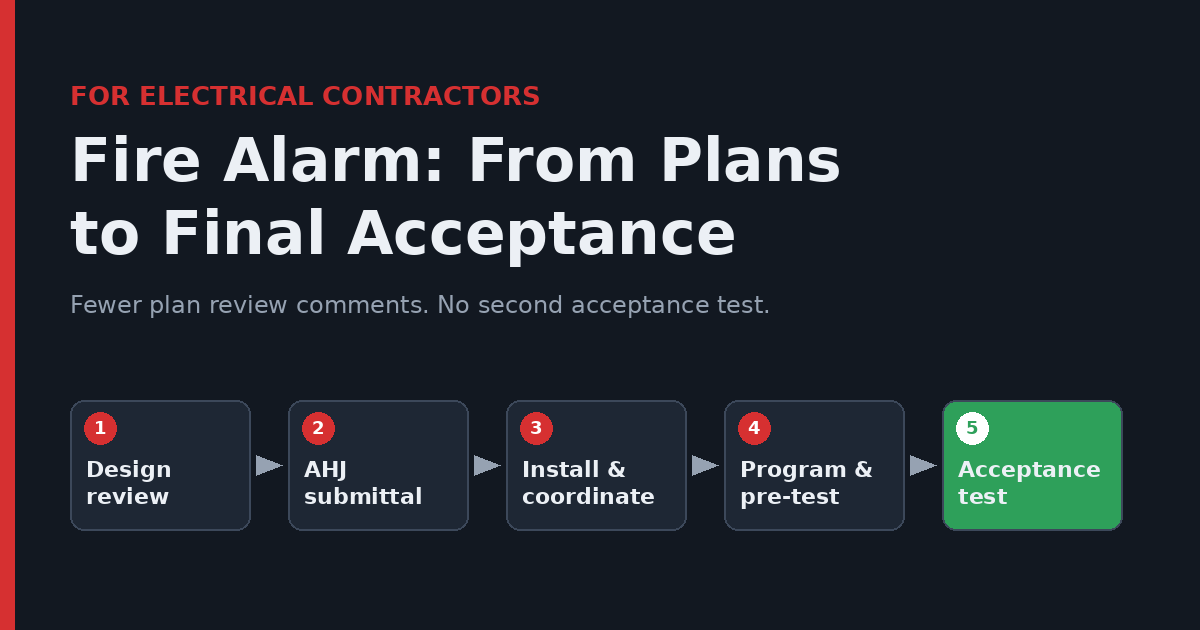
Fire requirements are complex, but the process to meet them doesn’t have to be. Here is the sequence we follow with electrical contractors on every project:
- Early design review. We look at the drawings before bid or right after award to catch code gaps, interface items, and pathway requirements while changes are still cheap.
- A complete, AHJ-ready submittal. Stamped or certified shop drawings, calculations, data sheets, and a sequence of operations written the way reviewers want to read it.
- Clear field documents. Riser diagrams, device addresses, and wiring details that your crew can install from without guessing.
- Trade coordination. We confirm the mechanical, elevator, sprinkler, and door hardware interfaces before the test, not during it.
- Programming and full pre-test. Every device and every sequence is tested before the fire marshal arrives.
- Acceptance test and record documents. We run the test with the AHJ and hand over as-builts and the completion documentation the code requires.
Parts and smarts, or turnkey
Many electrical contractors want to keep the installation labor and let a fire alarm specialist handle the design, equipment, programming, and testing. That “parts and smarts” model works well when the roles are clear from day one. Your crew pulls wire and mounts devices from drawings built for installers; we handle the engineering, the AHJ, the programming, and the test. On other jobs, a full turnkey install makes more sense. Either way, you get one team accountable for the system passing.
When the project gets complicated
Hospitals, data centers, labs, high-rise buildings, and industrial sites bring requirements most fire alarm providers rarely see: networked panels, voice evacuation, clean-agent suppression releasing, linear heat detection, and special hazard zones. This is where experience matters. Our team is one of the most experienced and highly qualified fire alarm teams in the country, and we are the only Edwards Elite partner in Utah. We design and support Edwards systems, FIKE clean-agent suppression, linear heat detection, and specialty fire alarm, and we are known for getting complicated systems to work reliably. You can read about one of those projects in Mission Accomplished: Fire Alarm for a Complex Environment.
After turnover, Edwards systems with Connected SAFETY PLUS give the owner remote visibility and reporting, which means fewer callbacks to your team for “the panel is beeping” calls. More on that in Modernizing Fire Alarm Administration with EST Connected Services Plus.
Book a lunch & learn for your team
Want your estimators, project managers, and foremen to spot fire alarm problems before they cost you schedule? Book a lunch & learn. We’ll bring lunch and walk your team through AHJ submittals, common plan review comments, trade interfaces, and how to plan for a first-time pass at acceptance testing. Have a project in hand? Bring the drawings and we’ll review them together.